Integrating Pipette Laboratory Silhouette Clipart into Modern Digital Design
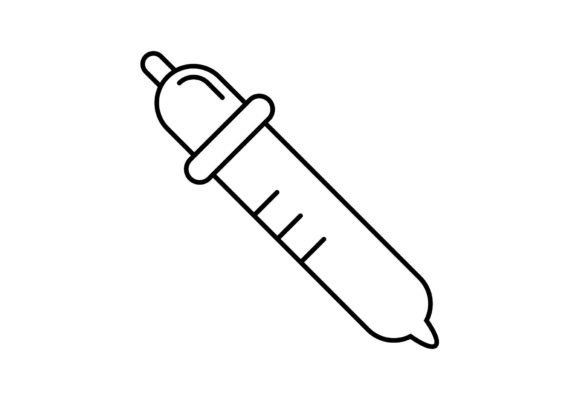
In the rapidly evolving landscape of digital content creation, the demand for high-quality, versatile visual assets has never been higher. Whether you are a graphic designer working on a corporate brochure, an educator preparing lecture slides, or a developer building a mobile application, the choice of imagery can significantly impact user engagement and information retention. Among the myriad of design elements available, scientific iconography holds a unique position. Specifically, the Pipette Laboratory Silhouette Clipart has emerged as a crucial resource for those seeking to convey precision, research, and scientific integrity without cluttering their visual space.
This article explores the multifaceted utility of minimalist pipette icons, examining why this specific aesthetic science vector symbol is becoming a staple in professional design workflows. We will delve into its technical specifications, practical applications across various media, and the strategic advantages of using scalable vector graphics in both print and digital environments.
The Power of Minimalism in Scientific Iconography
Are you looking for a minimalist pipette icon design? If so, understanding the principles of minimalism is key. In scientific communication, clarity is paramount. Complex illustrations can often distract from the core message, whereas a simplified silhouette allows the viewer to instantly recognize the object and its associated concepts—accuracy, measurement, and laboratory work. The aesthetic science vector symbol serves not just as a decoration, but as a functional signifier.
The beauty of the pipette silhouette lies in its recognizability. Even when reduced to its simplest geometric forms, the distinct shape of the pipette remains unmistakable. This makes it an ideal candidate for modern design trends that favor clean lines and ample white space. By stripping away unnecessary textures and gradients, designers can create images that load faster on websites and remain legible at smaller sizes on mobile devices. This textured image overlay approach ensures that the icon complements rather than competes with surrounding text and data.
Versatility Across Digital Platforms
One of the primary advantages of this simple laboratory artwork image is its adaptability. It is printable and actually ideal as a graphic design for mobile phones or on the web. This dual capability is rare in digital assets, which are often optimized for one medium at the expense of the other. However, with the right file formats and resolution, a single asset can serve multiple purposes seamlessly.
For web developers and UI/UX designers, the minimal icon is perfect for mobile apps, banner, info cards, websites, social media accounts, catalogues, brochures and many more. Consider a health-tech startup launching a new app for tracking medication or lab results. Using a crisp, black-and-white pipette icon can reinforce the brand’s commitment to medical accuracy while maintaining a sleek, modern interface. Similarly, educational platforms can utilize these icons to categorize chemistry modules or biology lessons, providing users with intuitive visual cues that enhance navigation.
Technical Specifications and File Formats
To truly leverage the potential of Pipette Laboratory Silhouette Clipart, one must understand the technical backbone of the files provided. High-quality digital assets are defined by their resolution and format flexibility. For instance, a standard specification might include a size of 512x512px at 300 dpi for printing on paper. This resolution ensures that when the image is printed on physical materials such as business cards, flyers, or academic posters, it retains sharp edges and professional quality without pixelation.
However, resolution is only part of the equation. The inclusion of multiple file formats is what transforms a simple image into a comprehensive design toolkit. A typical package includes:
- JPG: Ideal for quick previews and web use where transparency is not required.
- PNG: Essential for web overlays, allowing the icon to sit cleanly on colored backgrounds thanks to its transparent background.
- SVG: The gold standard for web development, offering infinite scalability without loss of quality.
- EPS and AI: Critical for professional graphic designers using Adobe Illustrator or similar software, allowing for full editability of paths and colors.
- DXF: Useful for CAD applications and laser cutting, expanding the utility of the design into physical prototyping and signage.
All these digital files are typically contained in a ZIP folder, ensuring easy download and organization. This variety ensures that regardless of your software preference—be it Photoshop, Illustrator, CorelDRAW, or a code-based web environment—you have the right tool for the job.
Enhancing Brand Identity in Science and Education
For businesses operating in the pharmaceutical, biotechnology, or educational sectors, consistent branding is vital. The use of a cohesive set of icons, including the pipette silhouette, helps establish a visual language that customers and students can trust. When visitors visit our shop for more modern digital icon design elements, they are often looking for more than just a single image; they are seeking a consistent aesthetic that can be applied across their entire brand ecosystem.
Imagine a research institute publishing an annual report. By using a unified set of laboratory icons, the report becomes not only more visually appealing but also easier to digest. The pipette icon might represent the methodology section, while other icons represent data analysis or fieldwork. This visual structuring aids cognitive processing, allowing readers to navigate complex information with greater ease. Furthermore, the minimalist style aligns with contemporary design trends, positioning the brand as modern, efficient, and forward-thinking.
Practical Implementation Strategies
Implementing these assets effectively requires a strategic approach. Here are several ways professionals can integrate Pipette Laboratory Silhouette Clipart into their projects:
- Social Media Graphics: Use the PNG version to create eye-catching posts for Instagram or LinkedIn. The transparent background allows for seamless integration with brand colors and promotional text.
- Educational Materials: Incorporate the SVG files into interactive e-learning modules. Because SVGs are code-based, they can be animated or manipulated via CSS to highlight specific parts of the laboratory process.
- Print Advertising: Utilize the high-resolution JPG or EPS files for brochures and catalogs. The 300 dpi specification ensures that the printed output matches the clarity of the digital original.
- App Interface Design: Embed the icon into mobile applications as a button or category marker. Its simple geometry ensures it remains recognizable even at small touch-target sizes.
Each of these applications leverages the inherent strengths of the clipart: simplicity, scalability, and professional appeal. By choosing the right format for the right context, designers can maximize the impact of their visual communications.
The Role of Vector Graphics in Future-Proofing Design
As screen resolutions continue to increase and new devices emerge, the importance of vector graphics cannot be overstated. Unlike raster images (such as JPGs), vectors like SVG, EPS, and AI are mathematically defined. This means they can be scaled up or down infinitely without losing quality. For a minimalist pipette icon design, this future-proofing is essential. An icon designed today for a standard smartphone screen must also look crisp on a 4K monitor or a large-format display at a conference.
Moreover, vector files are typically smaller in file size compared to high-resolution raster images, contributing to faster loading times on websites. In an era where page speed is a critical factor for SEO and user experience, optimizing assets through the use of vectors is a best practice that yields tangible benefits. The Pipette Laboratory Silhouette Clipart thus serves not only as an aesthetic choice but as a performance-enhancing element in web design.
Conclusion
The integration of high-quality, minimalist scientific icons into design projects offers numerous benefits, from enhanced clarity and brand consistency to improved technical performance. The Pipette Laboratory Silhouette Clipart exemplifies how simple, well-crafted visual elements can serve complex communicative needs. Whether used in digital interfaces, print media, or educational materials, this aesthetic science vector symbol provides a versatile foundation for professional design.
By understanding the technical specifications and diverse applications of these assets, creators can make informed decisions that elevate their work. As the demand for clear, efficient visual communication grows, resources like these will continue to play a pivotal role in shaping how we present scientific and educational content to the world. For those seeking to expand their design toolkit, exploring a broader range of modern digital icon design elements can provide the consistency and versatility needed to succeed in today’s competitive visual landscape.