Maximizing the Potential of Book with Cowboy and His Horse Digital Assets
In the rapidly evolving landscape of digital design, the demand for high-quality, versatile graphics has never been higher. Among the myriad of options available, the Book with Cowboy and His Horse collection stands out as a unique resource for creators seeking to blend rustic charm with modern aesthetics. This specific set of vector-based illustrations offers more than just simple clipart; it provides a foundational element for storytelling in visual media. However, many designers, entrepreneurs, and hobbyists overlook the technical nuances that determine whether these assets elevate a project or hinder its professional appeal. Understanding the intricacies of file formats, resolution requirements, and licensing applications is crucial for anyone looking to integrate these elements into their workflow effectively.
Understanding the Technical Specifications
Before diving into creative applications, it is essential to grasp what you are actually acquiring. The Book with Cowboy and His Horse files are crafted in Adobe Illustrator, a industry-standard vector program. This origin is significant because it dictates the scalability and editability of the graphics. The artboard size is set at 12 x 12 inches with a resolution of 300 DPI in the RGB color palette. While these specifications may seem standard, misinterpreting them can lead to subpar results.
A common misunderstanding arises regarding the difference between vector and raster formats. The collection includes SVG, JPG, and PNG files. The SVG (Scalable Vector Graphics) format is the crown jewel of this package. Because it is vector-based, it can be scaled infinitely without losing quality. This is ideal for large-format prints like banners or wall art. Conversely, JPG and PNG files are raster images. While they are convenient for quick web use, they are bound by pixel dimensions. If you attempt to enlarge a PNG beyond its original resolution, you will encounter pixelation, which drastically reduces the perceived quality of your design.
The RGB vs. CMYK Pitfall
One of the most frequent mistakes made by beginners and even some experienced designers involves color profiles. The Book with Cowboy and His Horse files are provided in the RGB (Red, Green, Blue) color palette. RGB is optimized for digital screens, such as monitors, smartphones, and tablets. However, if your intention is to create printed paper items, stationery, or handmade cards, you must be cautious. Professional printing typically requires the CMYK (Cyan, Magenta, Yellow, Key/Black) color model.
Using RGB files directly for print can result in dull, muted colors that do not match what you see on your screen. This discrepancy occurs because printers cannot reproduce the full spectrum of light-emitting RGB colors. To avoid this disappointment, always convert your files to CMYK within your design software before sending them to a printer. This step ensures that the vibrant hues of the cowboy and horse illustrations remain true to your vision when transferred to physical media like invitations or party decor.
Licensing and Commercial Use Misconceptions
Another critical area where users often stumble is the scope of usage rights. Many creators assume that purchasing a digital graphic allows them to resell the image itself. This is incorrect. The license for Book with Cowboy and His Horse typically permits the use of these elements to create end products. You can use them to design logos, wall art, jewelry, or web designs. However, you cannot simply upload the raw SVG or PNG file to a stock website or sell it as a standalone clipart pack.
This distinction is vital for small business owners and freelancers. For instance, if you are creating handmade craft items to sell on platforms like Etsy, you are adding value by incorporating the graphic into a larger design or physical product. But if you were to sell the digital file alone, you would be violating intellectual property norms and potentially facing legal repercussions. Always read the specific license agreement included with your download to ensure compliance. This protects your business reputation and respects the original artist’s work.
Optimizing for Different Mediums
To get the most out of these graphics, you must tailor your approach based on the final medium. Here are practical strategies for various applications:
- Web and Graphic Design: Use the SVG format for websites and apps. SVGs load quickly and remain crisp on retina displays. Ensure you optimize the code if necessary to keep file sizes small for faster page loading speeds.
- Printed Paper Items and Stationery: For invitations, announcements, and handmade cards, use the high-resolution PNG or convert the SVG to a high-DPI TIFF or PDF in CMYK mode. Check the bleed settings of your printer to ensure the cowboy and horse imagery is not cut off unexpectedly.
- Wall Art and Large Formats: Always start with the SVG file. Scale it to the desired dimensions in Adobe Illustrator or similar software. This ensures that the lines remain sharp and the details of the horse’s mane or the cowboy’s hat are distinct, even at large sizes.
- Jewelry and Small Crafts: When creating small items like pendants or keychains, detail loss can be an issue. Simplify the design if necessary by removing tiny elements that may not translate well to small-scale manufacturing processes like laser cutting or engraving.
Avoiding Design Clutter
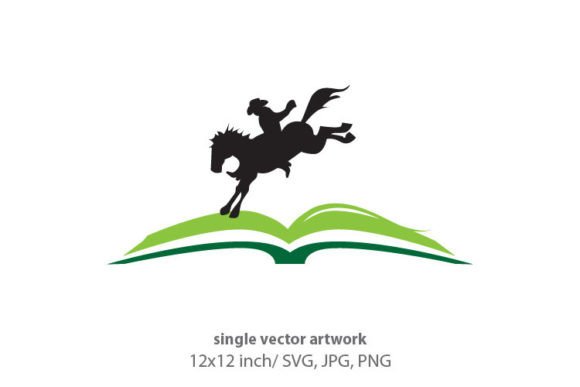
A subtle but impactful mistake is overcomplicating the design. The Book with Cowboy and His Horse illustrations are detailed and evocative. Adding too many additional elements, fonts, or textures can overwhelm the viewer and dilute the impact of the central image. Effective design often relies on whitespace and balance. Let the cowboy and horse be the focal point. Use complementary colors and minimalistic typography to enhance rather than compete with the artwork.
For marketers and bloggers, this means using the image strategically within blog posts or social media graphics. Instead of covering the image with text overlays, place text in adjacent empty spaces. This improves readability and aesthetic appeal, leading to better engagement rates. Educators can use these visuals to create engaging worksheets or presentation slides, ensuring that the graphics support the educational content without distracting from it.
Pre-Purchase and Pre-Use Checklist
Before integrating these assets into your next project, consider the following checklist to ensure a smooth workflow:
- Verify Software Compatibility: Ensure you have software that can open and edit SVG files, such as Adobe Illustrator, Inkscape, or CorelDRAW. While PNG and JPG are universally compatible, SVG editing requires vector-capable tools.
- Check Color Requirements: Determine if your final output is digital (RGB) or print (CMYK). Plan your color conversion strategy accordingly.
- Review License Terms: Confirm that your intended use case—whether for personal projects, client work, or commercial products—is covered under the license.
- Test Print Samples: If producing physical items, always print a test sample. Check for color accuracy, resolution clarity, and material compatibility.
- Organize Your Files: Keep your SVG, PNG, and JPG files organized in labeled folders. This saves time during the design process and prevents the accidental use of low-resolution raster files for large prints.
By paying attention to these details, you transform a simple digital download into a powerful tool for creative expression. The Book with Cowboy and His Horse collection offers versatility and charm, but its true value is unlocked through informed usage. Whether you are designing a logo for a western-themed brand, creating heartfelt handmade cards, or developing engaging web content, understanding the technical and legal aspects of these graphics ensures professional results. Avoid the common pitfalls of format confusion and color mismatch, and you will find that these assets seamlessly integrate into your creative toolkit, enhancing both efficiency and quality.